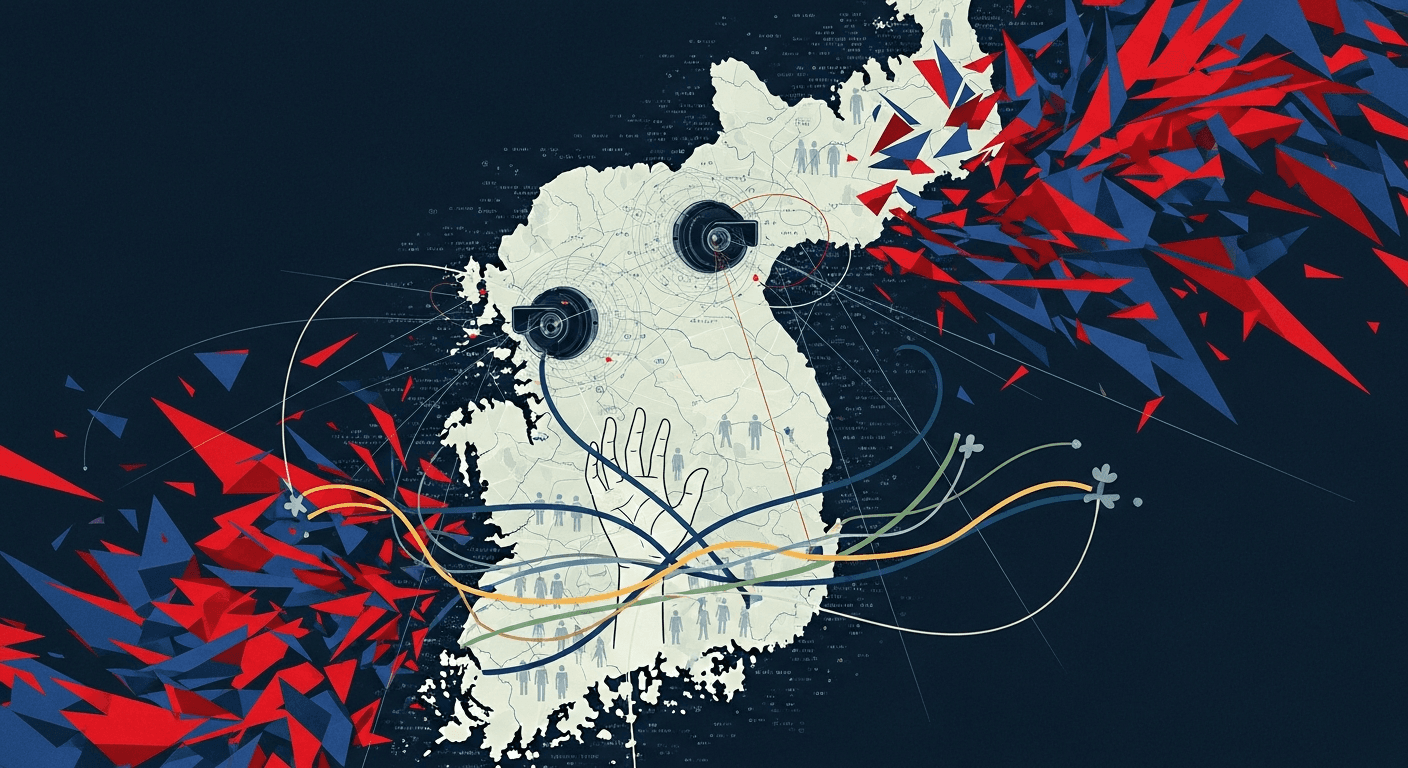
North Korea is intensifying internal control and human rights abuses, including a sharp increase in executions, under the pretext of blocking external cultural inflow since the COVID-19 pandemic. Concurrently, unofficial power hierarchies, exemplified by the flaunting of Kim Il Sung-Kim Jong Il Fund membership, are being used for population control and resource acquisition. In South Korea, political disputes surrounding alleged large-scale remittances to North Korea persist, and issues of U.S.-ROK information sharing have resurfaced, further complicating the situation on the Korean Peninsula.
Overview
This report cross-analyzes North Korea's recent trends of intensifying internal control and human rights abuses, alongside South Korea's domestic political controversy regarding large-scale remittances to North Korea and the re-emergence of U.S.-ROK information sharing issues. North Korea has significantly tightened control over its citizens, including a sharp increase in executions, under the pretext of preventing external cultural inflow since the COVID-19 pandemic, with severe human rights abuses reported within its military. Simultaneously, in South Korea, political disputes surrounding alleged Ssangbangul remittances to North Korea continue, and restrictions on U.S.-ROK information sharing have resurfaced, adding complexity to the Korean Peninsula's geopolitical landscape.
These developments indicate North Korea's internal instability and deepening isolation from the outside world, suggesting that South Korea's North Korea policy and the management of the U.S.-ROK alliance require multi-layered considerations.
Background & Context
Since Kim Jong Un assumed power, North Korea has consistently pursued a policy of strengthening internal control to maintain its regime. During the COVID-19 pandemic, it made extensive efforts to seal its borders and block the inflow of external information, which has led to severe human rights violations against its citizens. Meanwhile, in South Korea, allegations of large-scale remittances to North Korea during a past administration continue to be a central point of domestic political controversy, with legal judgments and political debates intertwined. Furthermore, information sharing within the U.S.-ROK alliance is a critical component of their joint response to North Korean threats; any disruption in this sharing can affect alliance trust.
Current Situation Analysis
North Korea appears to have significantly intensified internal control since the COVID-19 pandemic. According to a report by the Transitional Justice Working Group (TJWG), out of 144 confirmed executions since Kim Jong Un took power, 65 occurred after 2020, following the border lockdown. This represents more than a twofold increase in executions and a 3.5-fold surge in the number of individuals executed when comparing similar periods before and after the lockdown9, 11. Contact with external culture is specifically cited as a primary reason for these executions. The North Korean military is subject to stringent party control down to the battalion level, with severe human rights abuses reported, including dual authority of unit commanders and political officers, and daily surveillance to control soldiers' thoughts and actions5. Moreover, a torn North Korean plastic bag found on Yeonpyeong Island, bearing the propaganda slogan "Nothing to Envy in the World," but showing signs of being mended, highlights the disparity between the regime's propaganda and the dire reality faced by its citizens6. Separately, an incident where a checkpoint inspector was demoted after a Chinese investor flaunted membership in the Kim Il Sung-Kim Jong Il Fund reveals the existence of unofficial power hierarchies and privileged classes within North Korea10. Kim Jong Un's praise for both fallen and surviving soldiers at a ceremony commemorating operations in Russia's Kursk region is interpreted as an attempt to manage the psychological impact on North Korean soldiers captured in the Russia-Ukraine war13.
Changes in North Korean Executions Before and After COVID-19 Pandemic (Since 2011)
2011-2019 (Pre-lockdown): Approx. 30 cases (44 individuals executed)
2020-2024 (Post-lockdown): Approx. 65 cases (153 individuals executed)
Source: RFA Korea9, NK News11
In South Korea, controversy surrounding the alleged Ssangbangul remittances to North Korea persists. Former Ssangbangul Chairman Kim Seong-tae, after denying the 'salmon party' allegations, criticized the Democratic Party and the Financial Supervisory Service, claiming they were pressuring him "just like the Yoon Suk Yeol administration"2. However, he also unusually praised the prosecutor investigating the remittance case, stating the prosecutor "worked very diligently," drawing attention15. There are also strong rebuttals against allegations that evidence related to the remittances was fabricated7. Meanwhile, it has been confirmed that a senior Blue House security official visited Washington to resolve U.S. restrictions on information sharing with South Korea, which arose from Unification Minister Jeong Dong-young's mention of 'Gusong,' requesting the lifting of restrictions and follow-up discussions for implementing security agreements from last year's U.S.-ROK summit4. The Unification Ministry also stated that the question of using North Korea's official name warrants broad public debate due to constitutional controversy8.
| Category | North Korea Internal Control & Human Rights | South Korea Remittance & Information Sharing |
|---|---|---|
| Key Trends | Sharp increase in executions post-COVID-19, intensified party control in military, disparity between propaganda and reality, operation of unofficial power | Ongoing political disputes over remittance allegations, re-emergence of U.S.-ROK information sharing restrictions, Unification Ministry's proposal for public debate on North Korea's name |
| Core Issues | Blocking external cultural inflow, surveillance and control of citizens, worsening human rights, existence of privileged classes | Controversy over investigative fairness, claims of political pressure, trust in alliance information sharing, constitutional interpretation |
| Related Actors | Kim Jong Un regime, North Korean military, citizens, Kim Il Sung-Kim Jong Il Fund members | Former Chairman Kim Seong-tae, Democratic Party, FSS, Prosecutors' Office, Blue House, Unification Ministry, U.S. NSC |
Outlook & Implications
North Korea is expected to continue blocking external information and strengthening internal control to ensure regime stability. This will likely further deteriorate the human rights situation of its citizens and deepen its isolation from the outside world. Kim Jong Un's praise for soldiers is interpreted as an attempt to solidify internal cohesion and prevent potential defections, suggesting similar psychological warfare messages may recur. In South Korea, the remittance controversy will continue to generate domestic political repercussions, irrespective of legal proceedings, serving as a major source of inter-party conflict. The issue of U.S.-ROK information sharing directly impacts alliance trust and effective cooperation against North Korea, necessitating a swift resolution. The Unification Ministry's proposal for public debate on North Korea's official name could spark societal discussion on the future direction of inter-Korean policy and constitutional interpretations. This complex situation increases uncertainty on the Korean Peninsula and demands a cautious and multifaceted approach from the South Korean government.
Recommendations
Relevant international organizations and NGOs should strengthen continuous international monitoring and documentation of North Korea's human rights situation, and explore humanitarian aid and information access improvement programs to facilitate the inflow of external information. It is necessary to actively consider international pressure measures, such as referring North Korean human rights issues to the International Criminal Court (ICC).
The South Korean government should promptly restore U.S.-ROK information sharing channels and intensify diplomatic efforts to rebuild alliance trust. Domestic investigations related to remittances to North Korea must ensure political neutrality and transparency, and institutional improvements should be devised to prevent similar incidents in the future. Furthermore, for sensitive unification policy matters such as the use of North Korea's official name, broad public discussion should be pursued to reach consensus and establish a consistent North Korea policy stance.
The international community should monitor the impact of North Korea's intensified internal control on regional stability and explore multilateral cooperation measures to improve the human rights of North Korean citizens.
References
- LIV Golf Postpones New Orleans Tournament Citing World Cup, Weather — 조선일보
- Kim Seong-tae Accuses DP, FSS of Yoon Gov't-like Pressure Amid Ssangbangwool Probe — 조선일보
- Modric Injury Puts Croatia on High Alert for 2026 World Cup — 조선일보
- Blue House Aide Visits US to Address Fallout from Jeong Dong-young's "Gusong" Remark — 조선일보
- Party Control of North Korean Military at Battalion Level: Surveillance and Human Rights Denial — HRNK Insider
- Mended North Korean Plastic Bag Reveals Harsh Reality Behind Propaganda — DailyNK English
- Refuting North Korea Remittance Evidence Manipulation Claims — 조선일보
- Unification Ministry Calls for Public Debate on Using North Korea's Official Name — Korea Herald
- North Korea's Executions Surged During COVID-19 Due to Enhanced Internal Control — RFA 코리아
- NK Checkpoint Inspector Reassigned After Confronting Kim Il Sung-Kim Jong Il Fund Member — DailyNK English
- North Korea Sees Sharp Rise in Death Sentences Post-Pandemic: NGO — NK News
- KCTU Rallies Demand Probe into Cargo Unionist's Death, BGF Retail Direct Negotiations — 통일뉴스
- Kim Jong-un Praises Fallen, Surviving Troops; Message Aimed at POWs — Korea Herald
- Candlelight Action's 188th Rally Sees Reduced Turnout Amid Elections & Geopolitical Tensions — 통일뉴스
- Former Ssangbangwool Chairman Kim Seong-tae Praises Prosecutor for Diligent North Korea Remittance Probe — 조선일보
Comments (0)
Please log in to write a comment.