Changes and Challenges in North Korean Education
Translated from Korean by AI.
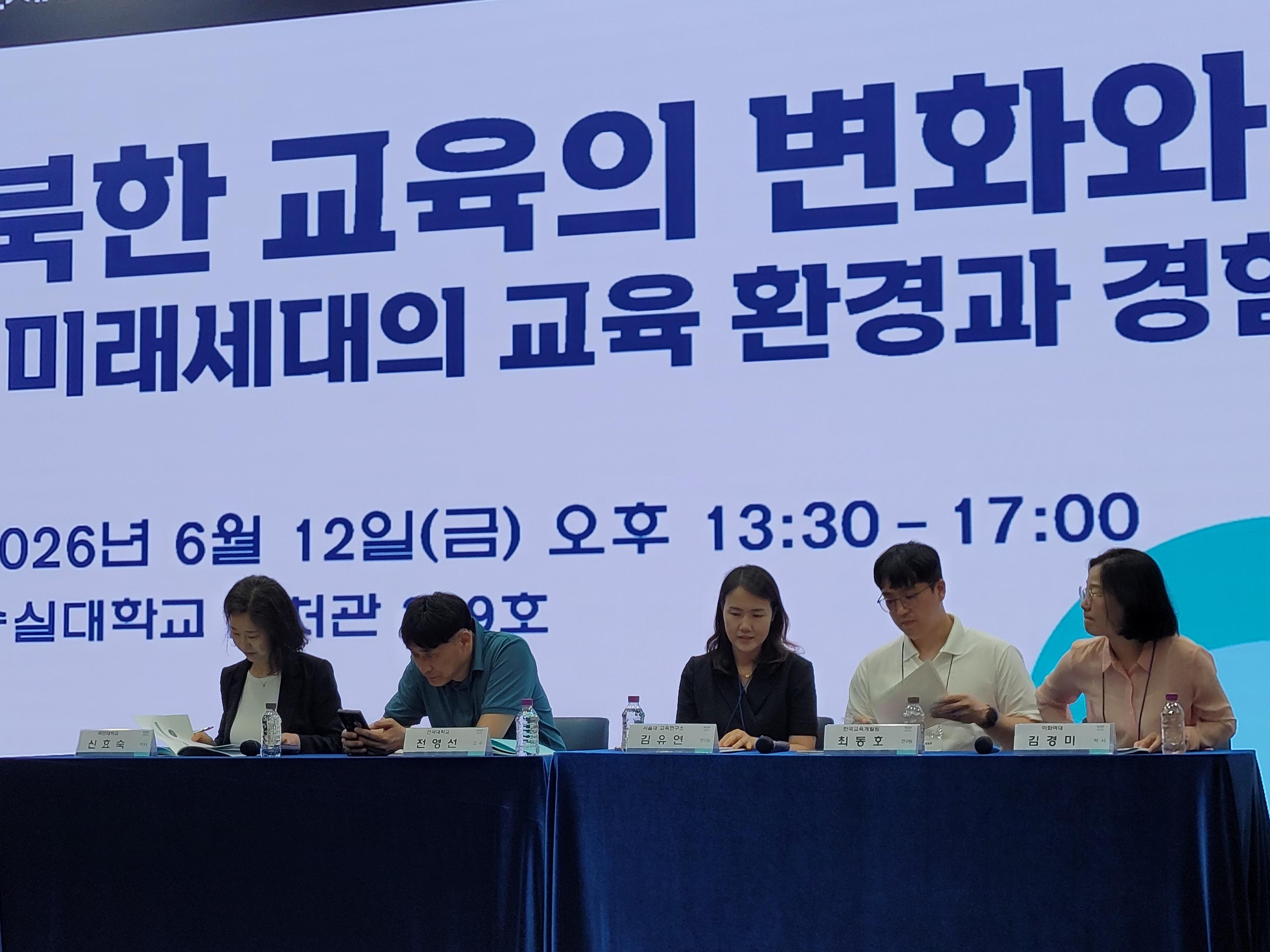
On June 12, 2026, a joint academic conference co-hosted by the Soongsil Institute for Peace and Unification and WECA (World Education and Culture Institute) was held at Soongsil University in Seoul, South Korea.
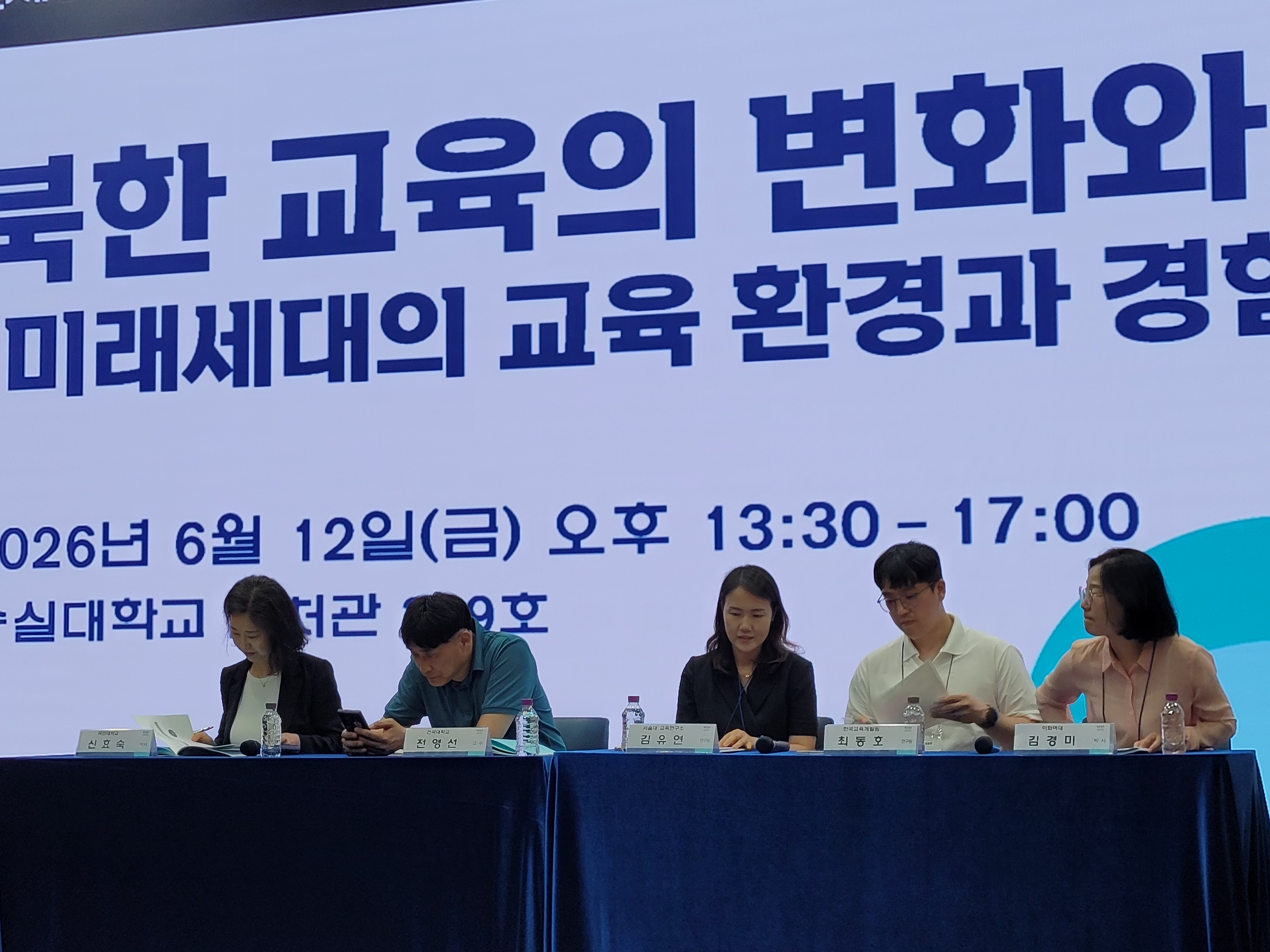
According to an analysis of North Korea's universal 12-year compulsory education policy presented at the conference (Dr. Shin Hyo-sook), North Korea is emphasizing science and technology education by expanding the number of technical senior middle schools to 600 and running technical classes at existing senior middle schools, while also introducing an elective-subject system at senior middle schools. Starting in 2026, it has applied the second Compulsory Education Program and begun expanding vocational and technical education in connection with the Regional Development 20×10 Policy. Alongside this, it appears to be working to narrow the educational gap between urban and rural areas through efforts to strengthen the material foundations of education. In short, North Korea's education policy is aligned with its regional development policy.
Notably, however, one of the stated goals is to provide school supplies and teaching equipment. This suggests that basic educational facilities remain underdeveloped. A persistent problem is that the responsibility for securing funds to improve the educational environment still falls on county-level local authorities and the private sector. The North Korean drama <New Spring in Paekhak Plain> vividly portrays the educational problems of rural North Korea. In the drama, a daughter refuses to follow her father, who is being transferred to the countryside, to a rural area where the rate of advancement to higher education is low.
A comparative analysis of post-pandemic discourse in North Korean higher education academia on global trends in educational development, using topic modeling (Kim Yu-yeon and Choi Dong-ho), was also presented. Having gone through the COVID-19 pandemic, border closures, international sanctions, and the Russia-Ukraine war, the North Korean regime appears to be shifting its emphasis toward strengthening practical educational capacity rather than educational form or structure.
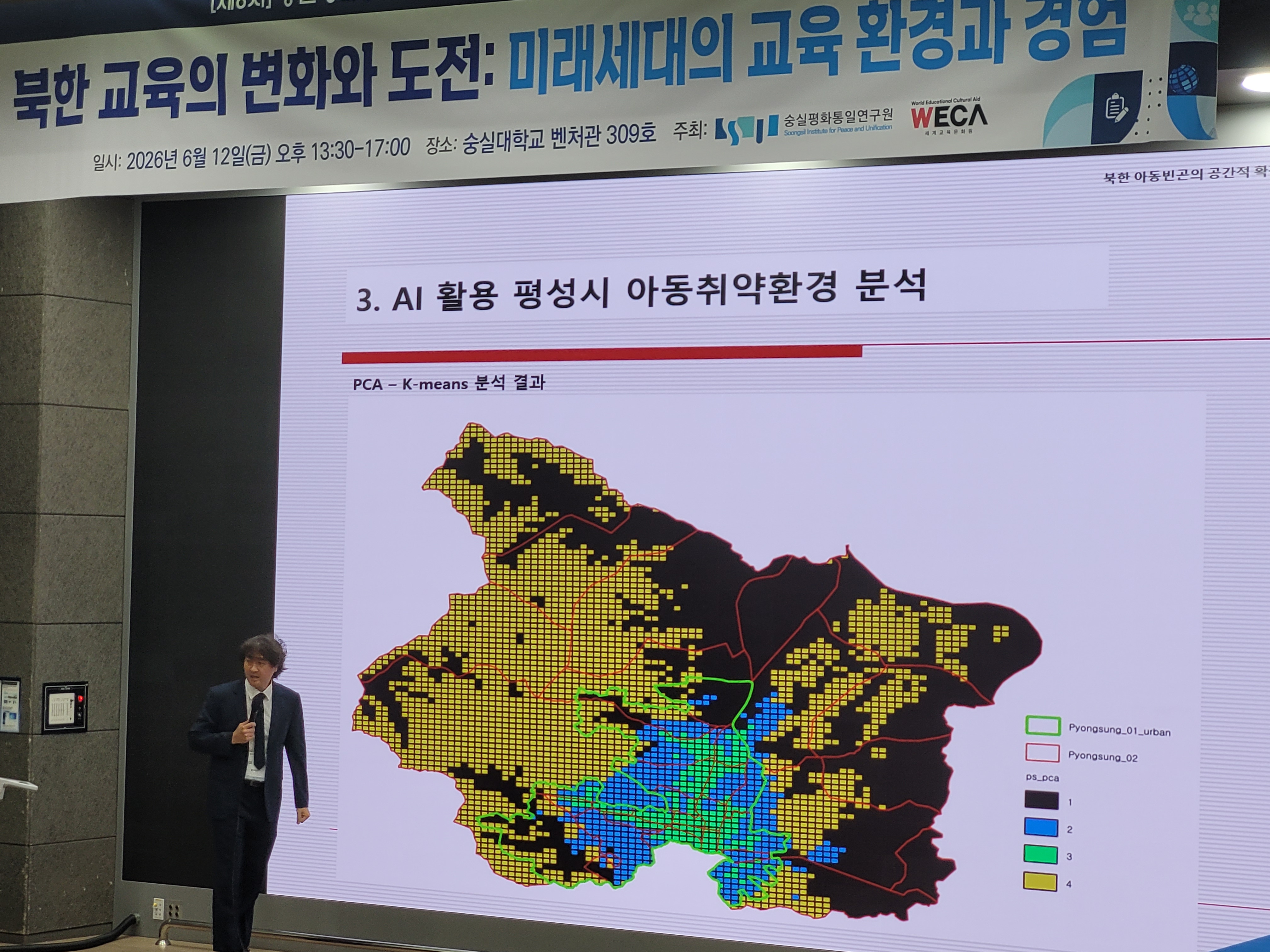
A presentation on educational inequality among North Korean children based on the Multidimensional Poverty Index (MPI) (Lee Si-hyo) conducted its analysis using indicators for health, education, living standards, and child-specific factors adapted to North Korean conditions. The analysis found that Pyongyang scored far higher than the rest of the country, while the remaining regions were at similarly low levels. South Hwanghae, North Phyongan, and Ryanggang provinces showed the highest levels of deprivation. In particular, Jagang and North Hamgyong provinces showed relatively greater deprivation in the health dimension, while North Hwanghae Province showed a high level of educational deprivation.
An analysis of career decisions and barriers among North Korean youth (Eom Hyun-sook) examined the ideal of the "useful person" in North Korean education policy. This reflects North Korea's national ideal of human talent, which emphasizes ideological revolutionary spirit and political commitment while simultaneously demanding practicality and technical skill. It implies usefulness not to the individual but to the state. In practice, the analysis found that North Korean youth still face career barriers, being assigned unilaterally to serve the state regardless of their personal preferences.
Comments 0
Please log in to write a comment.