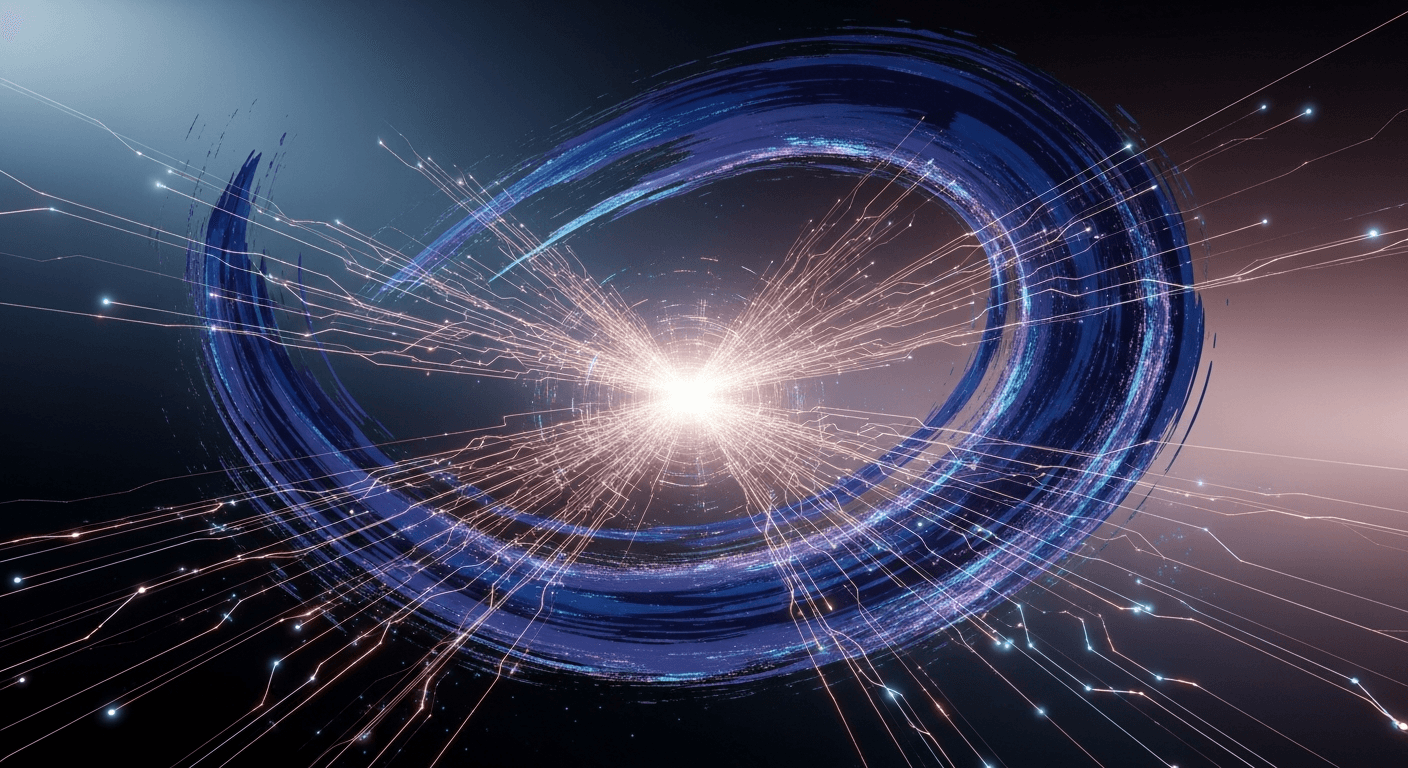
In the East Asian cultural and art scene, Artificial Intelligence (AI) is emerging not merely as a tool but as a creative agent and a source of inspiration. This column analyzes how AI art, through the works of prominent artists like Lee Lee Nam, teamLab, and Refik Anadol, is blurring traditional artistic boundaries and raising fundamental questions about the essence of creation and the role of humanity.
One day, a painting in a gallery catches your eye. Delicate brushstrokes, vibrant colors, an overwhelming scale. Yet, the artwork description states, "Image generated by an artificial intelligence algorithm." For a moment, you're perplexed. Is this truly art? Who is the real artist behind this piece? The East Asian cultural and art scene is currently responding most fervently to these questions posed by Artificial Intelligence (AI).
Digital technology's foray into the realm of art is not new. From Nam June Paik, the pioneer of video art, to media artist Lee Lee Nam's reinterpretation of classical paintings, and the immersive digital experiences offered by Japan's teamLab, technology has always been a tool to expand artists' imaginations. However, recent AI art goes beyond a mere tool, demonstrating its potential as a 'creative agent' that generates images, composes music, and even writes scenarios, thereby shaking the very definition of art.
East Asia, in particular, is opening new horizons for AI art on a unique cultural foundation where tradition and cutting-edge technology coexist. Korean media artist Lee Lee Nam breathes new life into classical masterpieces like Jeong Seon's
Japanese art collective teamLab has gained global renown for its interactive art, where viewers become part of the artwork, and the artwork responds to the viewers' movements. Their work is based on AI's real-time data processing and responsive technology, demonstrating that art is no longer a fixed form but a constantly changing and evolving organism. Their exhibitions, experienced at venues like the ArtScience Museum in Singapore or teamLab Borderless in Tokyo, vividly prove how AI expands artistic experience.
Turkish-American artist Refik Anadol has garnered worldwide attention for his AI-driven data sculptures and immersive media art. His 'Machine Hallucinations' series visually manifests vast amounts of data learned and reinterpreted by AI, creating a significant impact through exhibitions in major Asian cities, including Seoul's Dongdaemun Design Plaza (DDP). Anadol's work illustrates how AI can create new aesthetic experiences beyond human cognitive limits.
Key Milestones in AI Art
- 2016: 'The Next Rembrandt' Project - AI learned from Rembrandt's works to generate a new painting.
- 2018: Christie's Auction of 'Portrait of Edmond de Belamy' - An AI-painted portrait sold for $432,500, shocking the art market.
- 2022: Popularization of Generative AI (Midjourney, DALL-E 2, etc.) - Enabling the general public to create AI-generated images.
These phenomena raise fundamental questions for the art world. Who holds the copyright for works created by AI? Can works with minimal human intervention be recognized as art? How should traditional art education and criticism adapt? While some critics worry that AI art threatens human originality, others view AI as an artist's new 'brush' and 'collaborator.' In other words, AI acts as a catalyst, visualizing artists' ideas, performing complex calculations, and stimulating human imagination.
"AI does not replace the artist; it expands the artist's palette. What matters is not the technology itself, but what message the artist conveys and what experience they create through that technology."
— A Cultural Critic
East Asia stands at the forefront of these discussions. Its cultural background, which rapidly embraces evolving technology while exploring inherent human values through long history and tradition, can offer deep insights into the direction AI art should take. Amidst the infinite possibilities created by AI, we are prompted to reflect once again on unique human creativity, sensibility, and the very essence of art.
In conclusion, AI art is a cultural phenomenon that transcends mere technological advancement. It is a grand experiment that blurs the boundaries of art, redefines the subject of creation, and explores the possibilities of human-machine collaboration. East Asian artists are at the vanguard of this experiment, exploring new aesthetic spaces between code and brush, and envisioning the future of 21st-century art. Now, standing before AI-generated art, we must be willing to shatter our preconceived notions about art and humanity.
Comments (0)
Please log in to write a comment.