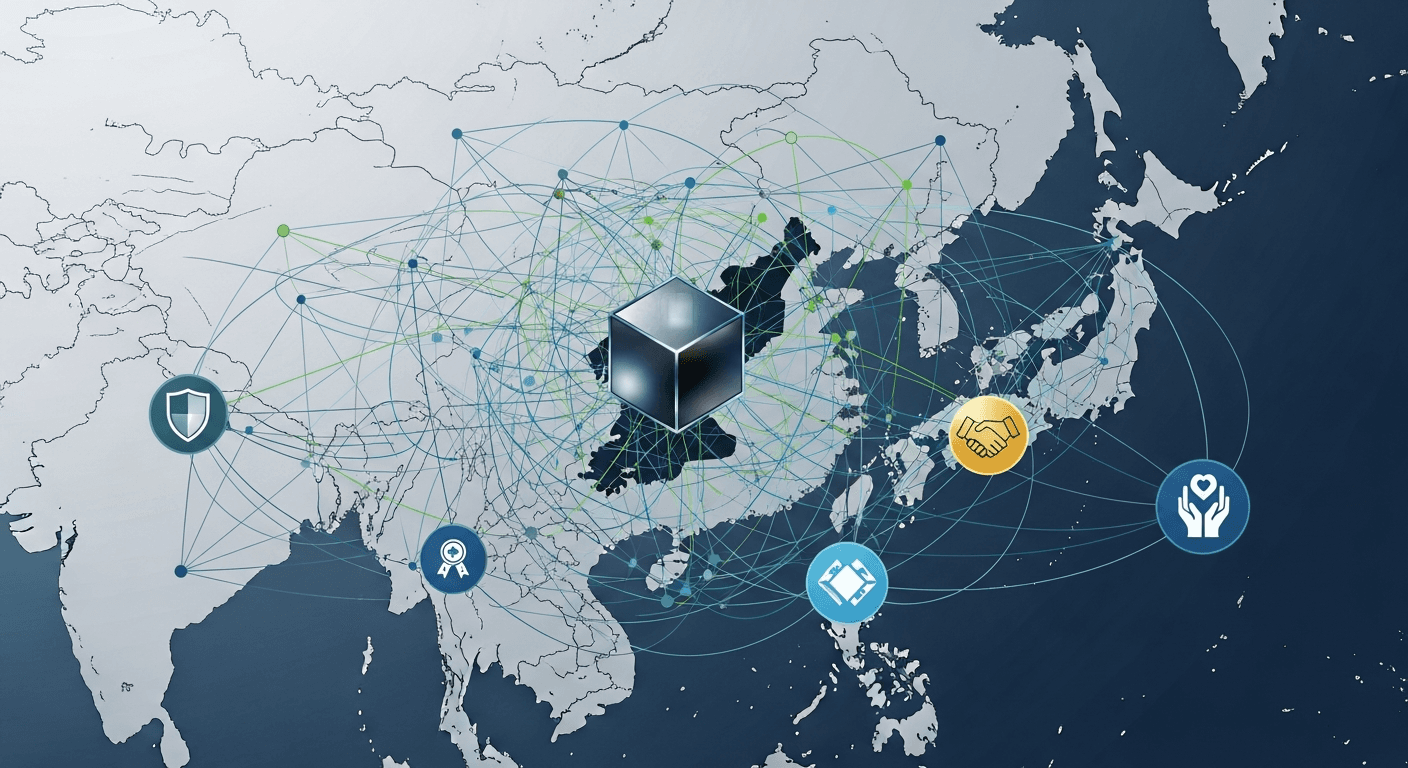
Recent changes in North Korea, including the renaming of its State Security Ministry and intensified internal control, coupled with the 'transfers to North Korea' controversy in South Korea, are analyzed as factors deepening the complexities of international development cooperation on the Korean Peninsula. This report analyzes the implications of these trends for development cooperation and proposes policy recommendations, including enhancing transparency, sustaining humanitarian aid, exploring non-political cooperation, and strengthening international coordination.
Overview
Recent moves by North Korea to strengthen internal control and the ongoing 'transfers to North Korea' controversy in South Korea are analyzed as factors deepening the complexities of international development cooperation on the Korean Peninsula. North Korea appears to be consolidating its regime security and intelligence functions internally while maintaining limited external relations. Concurrently, in South Korea, debates over the transparency and legitimacy of past economic cooperation with North Korea have resurfaced, alongside a sustained emphasis on strengthening security. This report analyzes the implications of these trends for international development cooperation, particularly inter-Korean cooperation, and proposes future policy directions.Background and Context
International development cooperation on the Korean Peninsula has unfolded under the dual constraints of North Korea's unique political and economic circumstances and international sanctions. Historically, inter-Korean economic cooperation encompassed humanitarian aid and economic development assistance, but its scope has been significantly curtailed due to international sanctions linked to nuclear development. The UN Sustainable Development Goals (SDGs) present universal development agendas such as poverty eradication, health promotion, and environmental protection. However, in North Korea's case, external support for achieving these goals often faces political sensitivities and transparency issues. Specifically, economic exchanges like transfers to North Korea can spark controversy over sanctions violations and the ultimate use of funds, potentially undermining the credibility of development cooperation.Current Situation Analysis
North Korea recently renamed its State Security Ministry to the 'National Intelligence Bureau' and changed the names of local security agencies to 'Intelligence Departments.'13 This move is interpreted as an attempt to bolster regime security and internal control while projecting an image of a 'normal state,' though it reportedly instills fear among residents.13 Externally, North Korea maintains limited diplomatic relations, as evidenced by Laos's congratulatory message to Kim Jong Un on his re-election.3 Additionally, commercial satellite imagery has detected the repurposing of a coastal cargo ship at the Sinpo South Shipyard, though its purpose remains unclear.8 These actions suggest a dual strategy by North Korea: strengthening internal cohesion while seeking survival through limited external engagement. Meanwhile, in South Korea, the 'Ssangbangul transfers to North Korea' controversy has escalated into a prosecutorial investigation and a parliamentary audit, leading to intense partisan debate.7, 9, 10 This incident highlights renewed concerns about the transparency and legitimacy of financial flows in past inter-Korean economic cooperation, underscoring the importance of ensuring credibility in future engagements. Furthermore, the South Korean government has decided to deploy the 'Korean Iron Dome' system earlier than planned in response to North Korea's multiple rocket launcher threats6 and emphasizes 'self-reliant defense,'15 maintaining a strong security posture. This security environment could constrain the space for development cooperation with North Korea. On a positive note, three districts in Gangwon Province—Inje, Cheorwon, and Yanggu—have been selected for a DMZ ecosystem preservation education and promotion project.14 This ongoing effort to conserve and publicize the ecological value of the Demilitarized Zone area is seen as indicative of potential indirect cooperation in the environmental sector, even in the absence of direct inter-Korean collaboration.
SDG 16: Peace, Justice, and Strong Institutions
North Korea's renaming of the State Security Ministry and intensified internal control may conflict with SDG 16's goal of building effective, accountable, and inclusive institutions. Transparent and accountable governance is a prerequisite for sustainable development.
North Korea's renaming of the State Security Ministry and intensified internal control may conflict with SDG 16's goal of building effective, accountable, and inclusive institutions. Transparent and accountable governance is a prerequisite for sustainable development.
Outlook and Implications
North Korea's intensified internal control and opaque external activities increase uncertainty regarding the international community's approach to development cooperation with the country. Specifically, the renaming to the 'National Intelligence Bureau' could deepen international concerns regarding human rights and governance, making it more challenging to ensure partnership and transparency—fundamental principles of development cooperation. The 'transfers to North Korea' controversy in South Korea is likely to demand stricter scrutiny of financial transparency and compliance with international sanctions in any future inter-Korean economic cooperation. The emphasis on strengthening security is expected to continue for the foreseeable future, potentially limiting the scope for large-scale development cooperation projects. However, non-political, environmental cooperation, such as the DMZ ecosystem preservation project, holds the potential to lay the groundwork for building trust and resuming exchanges between the two Koreas in the long term.Policy Recommendations
Considering the complexities of international development cooperation on the Korean Peninsula, South Korea's ODA policy should pursue the following directions:- Enhance Transparency and Accountability: In future discussions on cooperation with North Korea, measures to ensure international standards of transparency and accountability for financial flows and their utilization should be prioritized. This is essential to prevent the recurrence of past controversies and build domestic and international trust in inter-Korean cooperation.
- Sustain and Expand Humanitarian Assistance: Regardless of the political situation, humanitarian aid aimed at improving the basic quality of life for North Korean residents must continue. Efforts are needed to maintain and expand support channels, particularly in areas directly affecting vulnerable populations such as health and food security.
- Explore Non-Political Sector Cooperation: Long-term cooperation possibilities should be explored in non-political areas such as DMZ ecosystem preservation,14 climate change response, and disaster risk reduction. This could open avenues for dialogue and serve as a basis for gradual trust-building between the two Koreas.
- Strengthen Coordination with the International Community: Within the framework of sanctions, cooperation with UN agencies and international NGOs should be enhanced to explore creative and feasible ways to address the development needs of North Korean residents. This approach can increase the effectiveness of South Korea's ODA and contribute to the international community's engagement with North Korea.
References
- Japan Football Predicted to Reach World Cup Quarterfinals — 조선일보
- KMA: Magnitude 2.4 Natural Earthquake North of Kilju, North Korea — 연합뉴스
- Laos President Congratulates Kim Jong Un on Re-election — 연합뉴스
- North Korea Holds Follow-Up Meetings to Implement SPA Tasks — 연합뉴스
- North Korea: Generally Cloudy on 4th, Pyongan and Hwanghae Clear from Night — 연합뉴스
- South Korea to Deploy 'Korean Iron Dome' Against North's Artillery by 2029, Two Years Early — 조선일보
- Prosecution Transfers Ssangbangul N. Korea Remittance 'Statement Manipulation' Case to Special Prosecutor — 조선일보
- Unusual Ship Repurposing at North Korea's Sinpho South Shipyard Raises Questions — 38 North
- Ruling and Opposition Parties Clash Over North Korea Remittances at Parliamentary Inquiry — 연합뉴스
- Ruling, Opposition Parties Clash Over North Korea Remittance Allegations in Parliamentary Probe — 연합뉴스
- Kim Ju-ae's Fashion: A Visual Propaganda for North Korea's Next-Generation Leadership — BBC 코리아
- North Korea Opens 34th April Spring Friendship Art Festival for Kim Il Sung's Birthday — 연합뉴스
- North Korea Renames State Security Ministry to State Intelligence Bureau; Residents Fearful — DailyNK
- Gangwon's Inje, Cheorwon, Yanggu Selected for 2026 DMZ Ecosystem Conservation Project — 연합뉴스
- S. Korea's Lee Tells US Senators Seoul to Lead North Korea Defense with Self-Reliance — NK News
Share
Comments (0)
Please log in to write a comment.